01 · It captures
Any channel, one intake
A voice call, a Slack thread, an email, a ticket — Vocetta normalizes each into a single report, classified as a bug, a request, or a question.

Vocetta turns a report from connected channels — a Slack message, a support call, an Outlook email, or a Teams mention — into a code-aware investigation: the suspected files and lines, a root-cause hypothesis, and often a pull request that proves its own fix. Your source code and local indexes stay in your environment.
No inbound ports · Source never leaves the runner · One-afternoon setup
Meets your bugs where they're already reported
The moment a report lands, an investigation runs against your indexed codebase — no one has to reproduce it, triage it, or hunt for the file first.
A voice call, a Slack thread, an email, a ticket — Vocetta normalizes each into a single report, classified as a bug, a request, or a question.
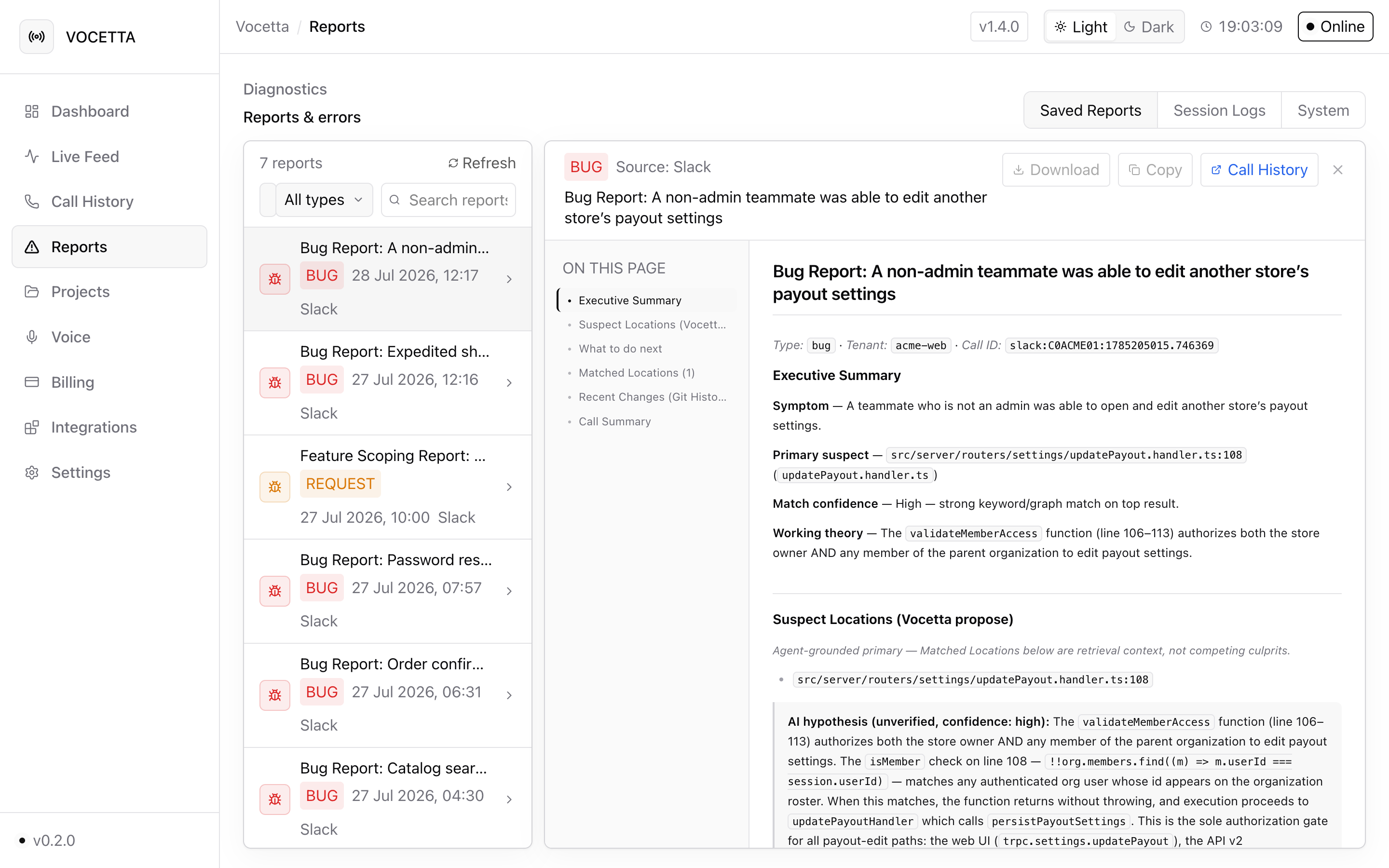
Your repo is indexed into an AST + semantic graph. Hybrid retrieval prunes thousands of files down to a few ranked locations — file, symbol, and line — with a root-cause hypothesis.
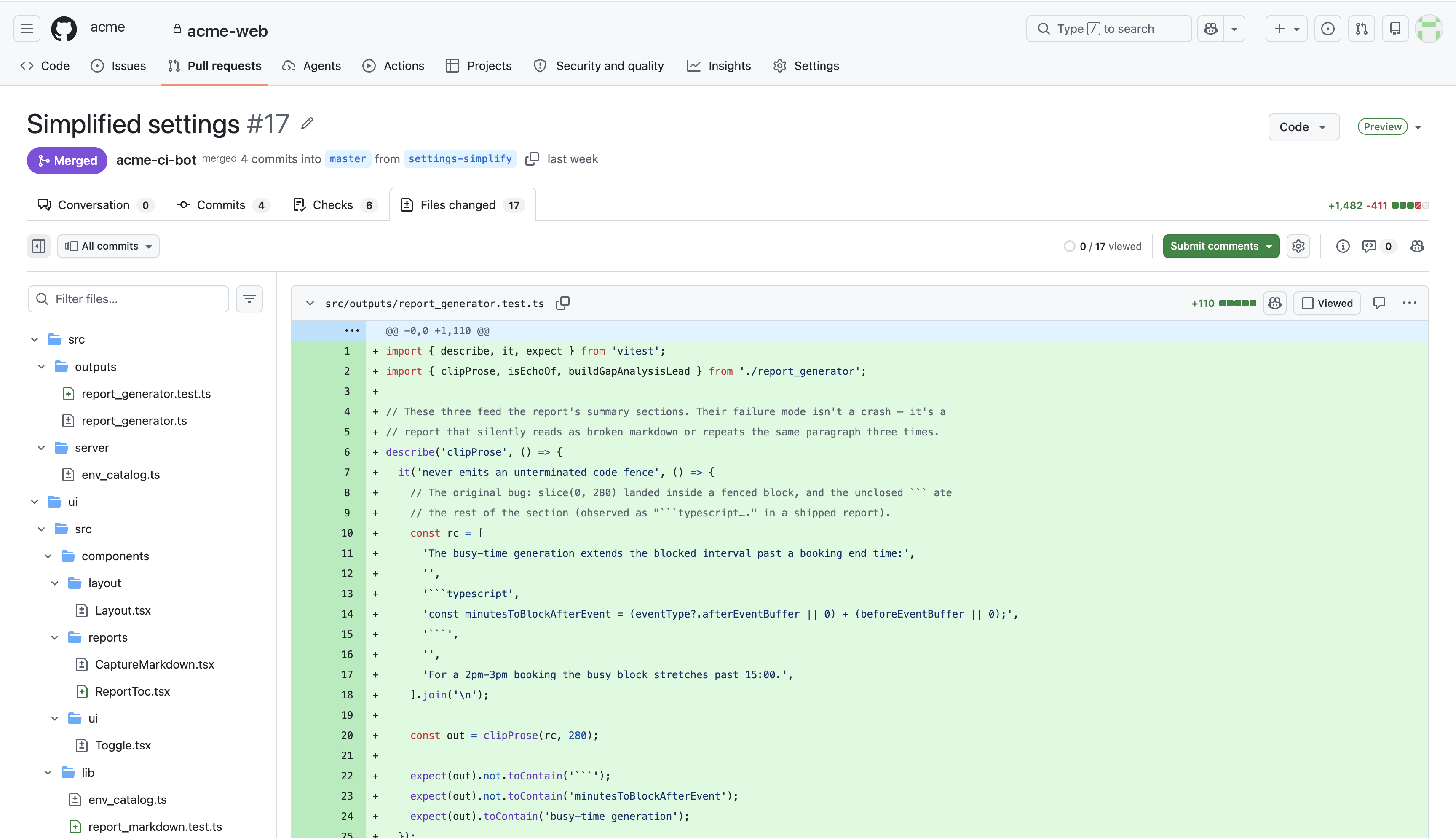
When confident, Vocetta writes a failing test, applies the fix, watches it go green, and opens a GitHub PR — marked ready only when the fix is proven, honest Draft when it isn't.
The customer describes their problem on a voice call. The agent has a real conversation — clarifying, scoping, sounding like one of your team. Quietly, in parallel, your codebase is being searched. Watch all three at once.
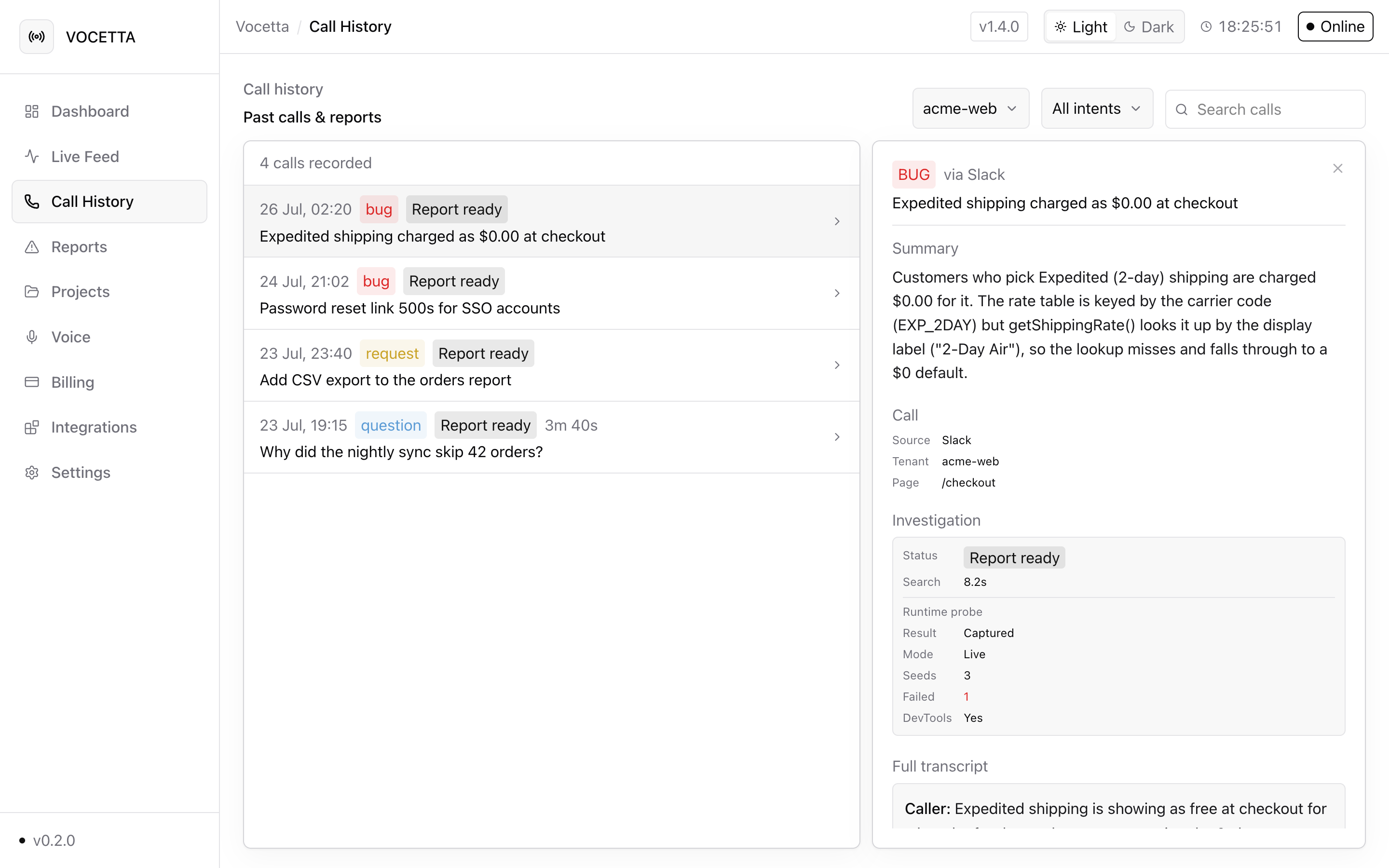
Point Slack, voice, Teams, Outlook, Jira, or Zendesk at the runner. All connections are outbound — nothing dials in.
Vocetta parses your codebase into the Rosetta Stone: an AST + semantic graph where every symbol is a node and every relationship a typed edge.
Each report triggers a background investigation — retrieval, a staged root-cause diagnosis, and an optional runtime probe against your running app.
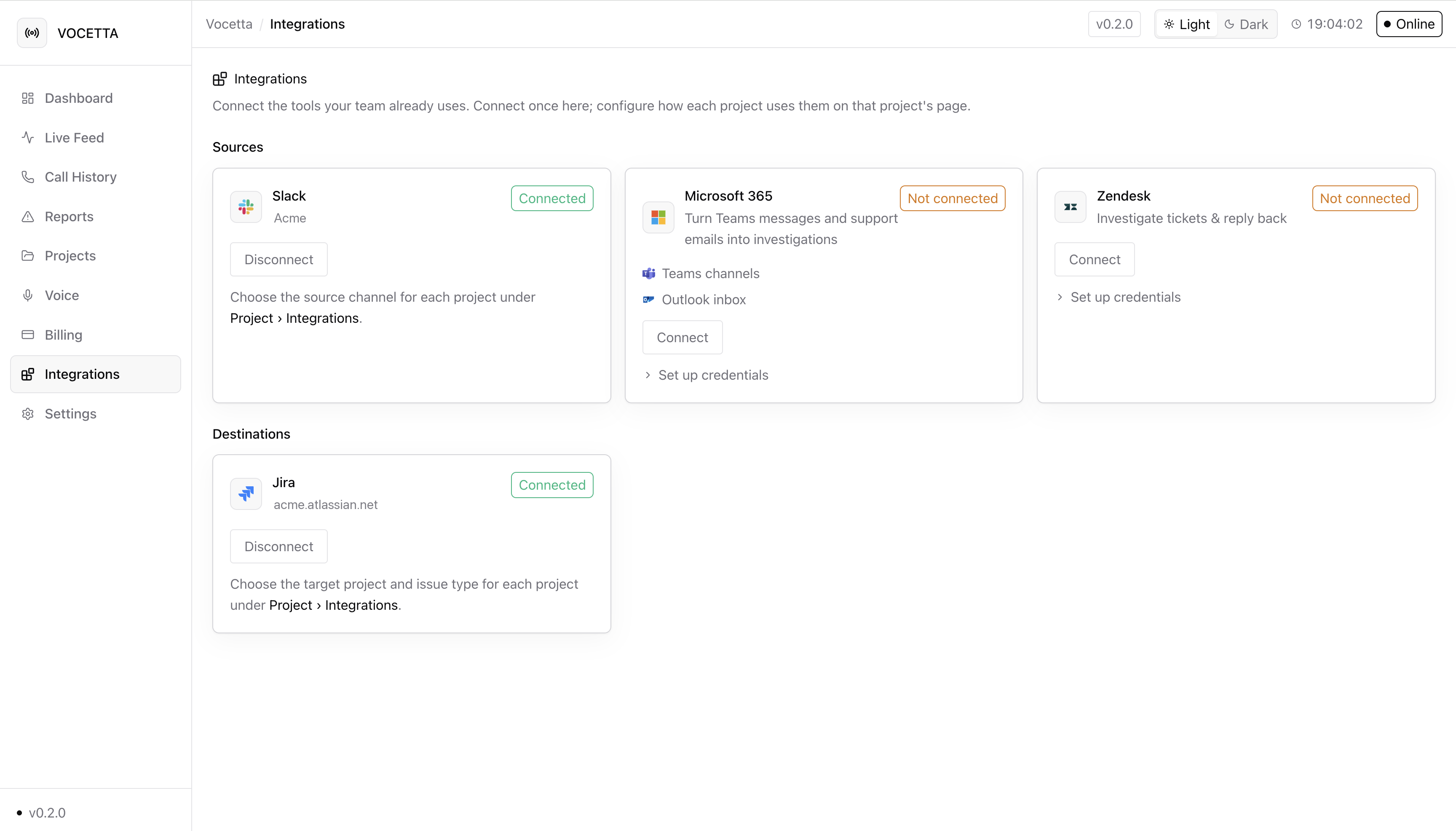
A dev-ready ticket, a threaded reply, or a self-verifying pull request lands in the tools your team already uses.
Vocetta ships as a single-tenant container that lives in your own cloud. Your runner opens no inbound ports and keeps your source, local index, secrets, and investigation reports. The optional Teams app relays Teams activity through Vocetta’s hosted switchboard to that runner so it can reply in the same conversation.
Source, secrets, local indexes, and reports remain on your runner.
Teams activity is relayed in transit only when that integration is enabled.
Most tools paraphrase the ticket. Vocetta reasons over your actual code and proves what it finds.
A tree-sitter AST graph is primary. Embeddings and the LLM are called only when static analysis isn't enough — so results are repeatable, not vibes.
The unit of search is a graph node — a specific method, not a whole file. Thousands of files collapse to a short ranked list with a reason for each.
A RED harness reproduces the bug, the fix is applied, and the harness must turn GREEN. PRs are marked ready-for-review only when the fix is verified.
A headless runtime probe drives your running dev or staging app on loopback to confirm the symptom before diagnosing it.
Sequential indexing, an 8 GB heap ceiling, and quantized embeddings keep it fast — proven on a 21,000-file enterprise repository.
A single-tenant image, license-gated at boot. No valid license, no routing — and the kill-switch drops the socket in seconds.
If a bug report means a developer, sooner or later, has to open the repo — Vocetta gets there first.
Monorepos and legacy systems where "which file?" is the hard part. Vocetta narrows the whole tree to the few nodes that matter — and cites why.
You ship for demanding customers who report bugs by voice, Slack, and email. Every report becomes a triaged, code-aware ticket instead of a vague note.
Regulated or data-sensitive teams that can't send source to a SaaS. Vocetta runs entirely inside your perimeter, egress-allowlisted for procurement.
Every plan starts with a 14-day pilot — no card required. Onboarding is one afternoon; we set up your index and channels with you on a call.
For a single team putting the runner to work.
For teams that want fixes, not just tickets.
For regulated, residency-bound, and large-scale deployments.
14-day pilot, no card. We set up your index and channels on a call. By tomorrow afternoon, reports come in — and triaged fixes go out.
No card · No inbound ports · One-afternoon setup